Wigeja Venula helps curious minds learn how to explain science clearly — through writing, video, and social media. No degree required. Just genuine enthusiasm and a willingness to learn.
 Finding the story
 Visual storytelling
Four core skill areas. Each one builds on the last. Together they give you a complete toolkit for communicating science in the modern world.
Scientific language exists for precision among specialists. But that same precision can lock out the very people who might benefit most from understanding the ideas. This module explores how skilled science communicators navigate that tension.
You'll work through techniques for identifying which terms genuinely need explanation, which can be replaced with everyday language, and which are worth teaching directly to your audience. The goal isn't dumbing down — it's translation.
Practical exercises cover rewriting dense paragraphs, building analogy libraries, and testing your explanations on people outside your field. You'll develop a personal style that feels natural rather than forced.
 Plain language wins
Data visualizations, diagrams, short-form video, infographics — visual formats have become central to how science reaches general audiences online. Yet many enthusiasts feel uncertain about where to start.
This module covers the principles behind effective scientific visuals: hierarchy, contrast, labeling, color choices that are accessible to colorblind viewers, and the difference between a chart that informs versus one that misleads. We look at successful examples from YouTube, Instagram, and independent newsletters.
You'll plan a visual piece from concept to finished form, learning to match format to platform and audience expectation.
 Planning the visual
Sharing inaccurate science — even with good intentions — erodes trust and contributes to the exact confusion science communication aims to reduce. Building strong fact-checking habits early protects your credibility and your audience.
This module walks through the landscape of scientific sources: peer-reviewed journals, preprints, press releases, secondary reporting. You'll learn to identify where information originated, how it transformed as it passed through media channels, and how to trace claims back to primary evidence.
We also cover how to handle uncertainty honestly. Science often operates in probabilities and ongoing debates. Communicating that uncertainty clearly — without undermining confidence in science itself — is one of the more nuanced skills in this field.
Exercises include source mapping exercises, identifying common misrepresentation patterns, and writing transparent correction notices.
 Tracing the source
An audience isn't built overnight. It grows from consistent, quality output and genuine interaction with people curious about the same things you are. This module looks at the practical mechanics of audience development across different platforms.
We explore how content behaves differently on a blog versus a YouTube channel versus a newsletter versus short-form video. Discoverability, feedback loops, community dynamics, and the rhythm of publishing all factor in. You'll map out a content strategy suited to your available time and preferred medium.
The module also covers how to handle critical comments — including from scientists who may disagree with your explanations — and how to use that feedback to strengthen your work rather than shut it down.
 Community grows slowly
Different formats suit different learning styles and schedules. Here's how each path is structured.
Focused on science writing for blogs, newsletters, and long-form articles. Covers narrative structure, tone calibration, and editing for clarity.
Built around explaining science on camera or through animation. Covers scripting, pacing, and production fundamentals accessible to beginners.
Designed for sharing science in short formats across platforms. Covers thread writing, visual posts, and growing a following around specific science topics.
 Learning at your pace
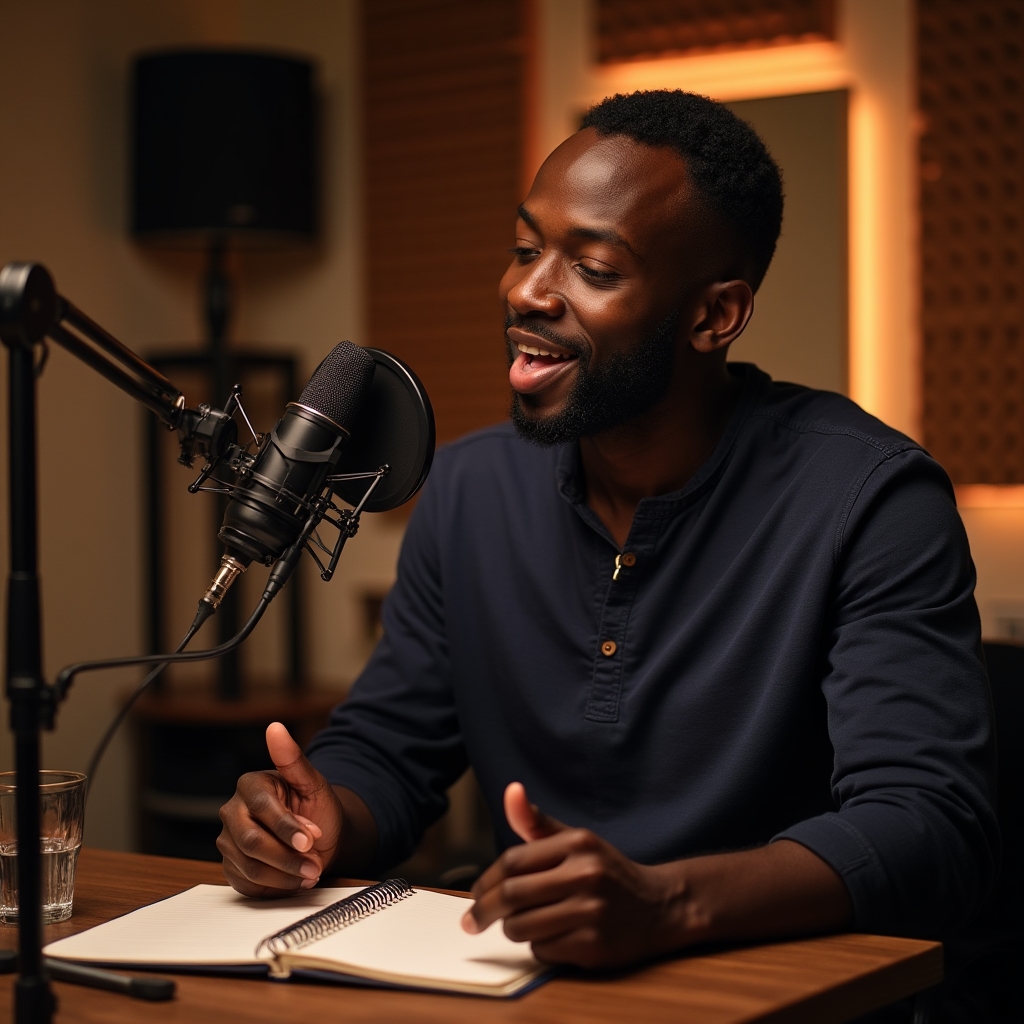 Your voice matters
Science communication has a gatekeeping problem. Many platforms assume you're either a working scientist or a trained journalist. Wigeja Venula was built for everyone else — the biology enthusiast who runs a weekend blog, the physics fan who wants to try YouTube, the environmental advocate figuring out Instagram.
The lessons here focus on transferable communication skills. Understanding how to structure an explanation, choose the right medium, verify what you're sharing, and connect genuinely with an audience. Those skills don't require a particular credential. They require practice and good guidance.
Read Our StoryFrom your first visit to publishing your first piece, here's what the experience looks like.
Start by identifying where you want to share science content. Written articles and newsletters suit people who enjoy careful, deliberate expression. Video works well for those comfortable with performance and patient with technical learning curves. Social media fits people who communicate in short bursts and enjoy rapid feedback. There's no wrong choice — each track develops the same underlying communication principles through a different lens.
Each module is self-paced with reading material, worked examples from real science communicators, and practical exercises. Lessons build progressively — earlier modules on clarity and accuracy underpin later modules on audience and strategy. You can work through a track in order or dip into specific topics based on what you're working on right now.
The exercises throughout each module are designed to produce real, publishable work — not just practice drills. By the end of any track, you'll have multiple pieces ready to share, a clearer sense of your voice, and a working process you can repeat. The platform encourages you to publish and iterate, treating early work as a starting point rather than a final product.
Later modules focus on reading audience response, adapting your approach, and expanding into other formats. Many communicators find that starting with one medium teaches them instincts that transfer naturally to others. The platform is designed to grow alongside your practice rather than ending at a graduation point.
Questions about the platform, course content, or anything else — we're here.
St. Louis, MO
